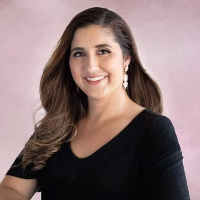
Jacqueline Rivers, LMFT
New Mexico · 10 years in practice
Jacqueline Rivers is a licensed Marriage and Family Therapist who uses relational and trauma-aware methods to help people manage emotional pain and move forward.
License and registration
- LMFT, New Mexico
- CMF0180001 · expires September 2026
- NPI
- 1821411679 · national provider identifier
- Years in practice
- 10
- Languages
- English
Details are as listed on the therapist's public professional profile. You can check the license with the issuing state board, and the NPI with the national registry.
About Jacqueline
Jacqueline Rivers is a licensed Marriage and Family Therapist who uses relational and trauma-aware methods to help people manage emotional pain and move forward. She frames work around relationships and attachment, and pairs those ideas with practical tools for daily life. Her approach centers on listening first and tailoring steps to each person’s needs.
Sessions look at current struggles and the patterns that keep problems repeating. She helps people with anxiety, depression, grief, relationship conflict, and the strain that comes with major life changes.
Background and approach
Jacqueline trained in family and child science and holds a Master of Science in Family and Child Science with an emphasis in Marriage and Family Therapy. She also has a Bachelor of Science in Family and Human Development and has worked in the field for about 10 years. Her credential is LMFT, licensed in New Mexico.
She combines attachment-based ideas with client-centered and solution-focused techniques. Mindfulness tools and trauma-focused work are part of the mix when they suit the person's goals. EMDR is listed among the methods she uses as one option for processing difficult memories and reactions.
People come for help with parenting stress, career pressure, body image concerns, caregiving strain, and communication problems. Jacqueline also supports those facing fertility, cancer, or major relationship changes by helping them find manageable steps and clearer choices.
Focus areas and approaches
Everything Jacqueline lists on their public professional profile, in their own terms.
- Stress, Anxiety
- Family conflicts
- Grief
- Depression
- Coping with life changes
- LGBT
- Relationship issues
- Trauma and abuse
- Intimacy-related issues
- Parenting issues
- Self esteem
- Career difficulties
- Bipolar disorder
- Coaching
- Compassion fatigue
- ADHD
- Abandonment
- Attachment issues
- Body image
- Cancer
- Caregiver issues and stress
- Communication problems
- Coping with natural or human-caused disaster
- Divorce and separation
- Family of origin issues
- Family problems
- Fertility issues
- Guilt and shame
- Life purpose
- Men's issues
- Midlife crisis
- Mood disorders
- Multicultural concerns
- Panic disorder and panic attacks
- Postpartum depression
- Post-traumatic stress
- Pregnancy and childbirth
- Self-love
- Social anxiety and phobia
- Women's issues
- Workplace issues
- Young adult issues
Approaches Jacqueline names
- Eye Movement Desensitization and Reprocessing (EMDR)
- Attachment-Based Therapy
- Client-Centered Therapy
- Mindfulness Therapy
- Solution-Focused Therapy
- Trauma-Focused Therapy
Naming an approach is not evidence of training in it. This directory copies what each therapist lists and does not check training records.
Online support
How attachment and trauma-informed approaches work online
Jacqueline often uses attachment-based and client-centered methods to help people understand patterns in their relationships and feel more grounded. Attachment-based work looks at how early relationship experiences shape current reactions and helps people build more supported ways of connecting. Client-centered therapy emphasizes a respectful, nonjudgmental space where the person sets goals and the therapist listens and reflects.She also uses EMDR as one way to address distressing memories and strong emotional reactions when appropriate. EMDR is a trauma-focused technique that can help reduce the intensity of difficult memories and make them easier to manage during everyday life. Choosing which approach to use is a collaborative process; the therapist will discuss options and adapt methods based on a person's history, goals, and comfort level.
Online work is offered by video calls, phone sessions, live chat, and text-based messaging to give flexible ways to connect. Video calls allow a fuller conversation and nonverbal cues, phone sessions are useful when bandwidth is limited, and messaging or live chat can fit brief check-ins or busy schedules. These options help people keep therapy consistent around work, caregiving, or travel while still focusing on progress and practical steps.
We will earn a commission if you sign up through our link, at no cost to you. It does not change what you pay or the order of the listings.
Questions people ask
What kinds of concerns does Jacqueline address?
She works with stress, anxiety, depression, grief, trauma and relationship issues, plus related areas like parenting strain, caregiving stress, body image, and career concerns.
What is her therapeutic style like?
Her style is client-centered and relational, blending attachment-based, solution-focused, mindfulness, and trauma-focused ideas to match each person's needs.
How much experience does she have in practice?
She has about 10 years of clinical experience working with individuals, couples, and families in a variety of settings.
What are her credentials and where is she based?
She is an LMFT licensed in New Mexico and completed graduate training in Family and Child Science with an emphasis in Marriage and Family Therapy.
Which languages are sessions offered in?
Sessions are offered in English.
What session formats are available?
She offers video calls, phone sessions, live chat, and text-based messaging to fit different schedules and needs.
How are costs and billing handled?
Costs vary with location and therapist availability; sessions use a subscription model that can be canceled at any time.
How do I get started with therapy?
Begin by selecting the Start Therapy button, completing a short matching questionnaire, and then scheduling based on the therapist's availability.
More therapists in New Mexico
See allMark Silla
LPCC
Compassionate clinician focused on practical change
- Stress, Anxiety
- Addictions
- Relationship

Xochitl Valenzuela
LCSW
Compassionate therapist for stress and trauma
- Stress, Anxiety
- Trauma and abuse
- Self esteem

Moriah MacCleod
LPCC
Compassionate counselor focusing on practical growth
- Stress, Anxiety
- Trauma and abuse
- Depression
Is this your profile?
Ask us to correct details or take the page down.
Contact us